Mirko Francesconi
mirko [dot] francesconi [at] ens-lyon [dot] fr
- ORCID 0000-0002-8702-0877
- Phone : +33 4 26 68 82 82
- Building : Rockefeller, 3rd floor, Wing D
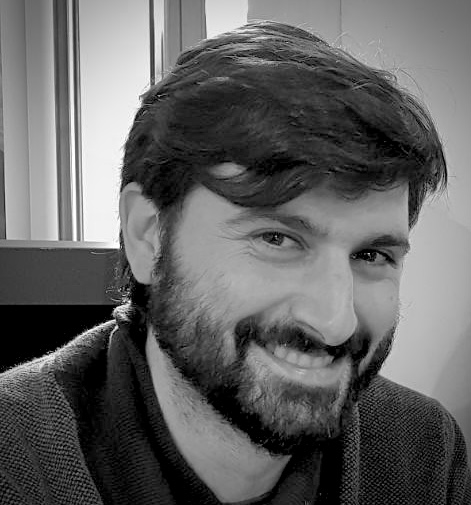
Short Bio
Mirko Francesconi is associate research professor in the group of Thomas Boulin at MeLiS since 2025. He obtained his master (2006) and his PhD (2010) in Biotechnology at University of Bologna. During his career he addressed one overarching fundamental biological question: why are individuals different?
To address this question, he integrates and analyze large-scale -omics data, including at single-individual and single-cell level, examining both genetic and non-genetic (epigenetic) sources of phenotypic variation in various model organisms and humans. To this end, he employs and
During his post-doc in Ben Lehner’s lab at the Centre for Genomic Regulation in Barcelona he has pioneered the integration of reference atlases to quantify hidden dynamics and states from -omics data and systematically characterized the impact of genetic variation on gene expression dynamics during C. elegans development (Francesconi and Lehner Nature, 2014). Starting from single-animal transcriptomics data, in collaboration with Marcos Perez, he identified maternal age as a major source of interindividual phenotypic variation among genetically identical roundworm (Perez*, Francesconi* et al. Nature, 2017). In collaboration with Thomas Graf lab CRG Barcelona, starting from time-series single-cell transcriptomic profiling of B-cell to macrophage transdifferentiation and B-cell to pluripotent stem cell reprogramming, he discovered that pre-existing variable endogenous activity of MYC, a master transcriptional regulator, in starting B-cells, impacts cell plasticity in opposite ways in these two types of cell conversions (Francesconi*, Di Stefano* et al. eLIFE, 2019).
He moved to LBMC, ENS Lyon in 2018 to lead the Quantitative Regulatory Genomics team and he discovered that parental perception of pheromone delays germline development and sexual maturation in the progeny, identifying parental perception of social environment as a second source of phenotypic variation in C. elegans (Perez, … Francesconi* and Lehner*, Current Biology, 2021).
Most recently, he developed RAPToR, a robust and precise machine learning method to estimate the real physiological age of a sample from its transcriptome, exploiting reference time series atlases (Bulteau and Francesconi, Nature Methods 2022). RAPToR, which is implemented in a R library (github.com/LBMC/RAPToR), is incredibly robust, it works even across distant species, and very flexible, it works both for development and aging in bulk, dissected tissue, single-individual and single-cell data from model organisms and humans.
Academic Positions & Education
- Since 2025 Associate research Professor at the MeLiS laboratory and University of Lyon (UCBL).
- 2018 - 2025 Associate research professor, leader of the QRG team at LBMC, ENS Lyon.
- 2023 Habilitation à diriger des Recherches (HDR), Université Lyon 1.
- 2010 - 2018 Post-doctoral fellow with Ben Lehner's group, CRG Systems Biology research unit, Barcelona, Spain.
- 2007 - 2010 PhD in Cellular and Molecular Biotechnology in the Gastone Castellani group, Physics department, Bologna University, Bologna, Italy.
- 2006 - 2007 Computational Biologist in the Gastone Castellani group, Physics department, Bologna University, Bologna, Italy..
- 2000 - 2006 5-year bachelor+master curriculum in pharmaceutical biotechnology (Final mark 110/110 summa cum laude).
Research grants
-
Coordinator
- ANR AAPG JCJC 2019, 281.3K €
- IDEX-Lyon Impulsion 2019, 25K €
- ENS-Lyon Project émergent 2019, 20K €
-
Partner
- ANR AAPG 2025, 300K€
- ANR AAPG 2021, 110K€
- NERVSPAN MSCA European Doctoral network, 2024, 300K€